
Are Streaming Services Killing Cinemas?
- Oliver Murphy
- Feb 3, 2021
- 3 min read
Since 1895, when audiences were shocked to see a series of moving images depicting a train coming towards the camera, cinema has evolved to be a multi-billion pound industry. Film has an undebatable impact on the world, bringing to light social issues, or introducing new viewpoints, educating us about different cultures and lifestyles, or simply entertaining us. With so many films catering to different audiences, and so many filmmakers who are passionate about driving forward the industry, cinema is undoubtedly a significant form of media.
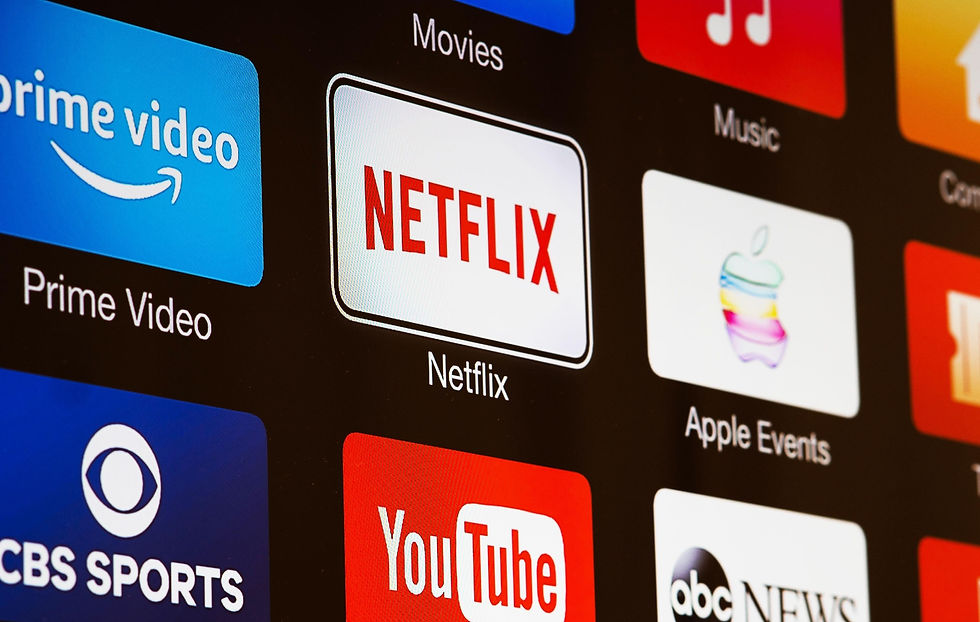
An interesting change in this industry has been exactly how audiences consume entertainment. Since 2007, Netflix has been revolutionising and challenging how films are viewed. Prior to 2007, they operated as a DVD rental program, before the company shifted to streaming content online, to make the consumption of films more convenient.
This may explain the growth of Netflix, as the simplicity of just going on your device and then selecting a film to start watching eliminates the hassle of going to a physical cinema, as well as offering a monthly price plan less than a cinema ticket.
This has become worrying to cinemas, who now may struggle to retain customers and attract audiences. 195 million people last year subscribed to Netflix, and millions more subscribed to the wide array of competitors, such as Amazon Prime Video or newcomer Disney Plus. Each of these platforms has invested millions into creating new original content for subscribers, offering a wide array of genres and purchasing intellectual properties to maximise their customer base.
But do streaming services pose that much of a threat to cinemas? The ongoing coronavirus pandemic has unfortunately strengthened their reign, hugely influencing the habits of studios and viewers alike. This was immediately obvious with Trolls World Tour, an animated children's film due to release in cinemas at the beginning of the lockdowns in March. Instead it was released to Sky, available to home audiences. Likewise, Disney’s Mulan released on Disney Plus for 20 pounds plus subscription fee.
Later in the year, Christopher Nolan’s thrilling blockbuster Tenet managed to release in cinemas, a huge move that aimed to attract audiences back to cinemas. It underperformed for a film of its scale, proving that streaming services still held the upper hand. Now, dozens of films, such as Tom Hanks’ Greyhound, planned for cinema releases are being diverted onto streaming services.
Now, some films are simultaneously being launched to studio’s streaming services and cinemas. Audiences who are anxious about going into cinemas can still enjoy the entertainment. This is a trend that looks to continue even if or when cinemas reopen. The major shift in how studios have now begun to release films exclusively or simultaneously on streaming platforms will be another blow for the supporters and workers of traditional cinemas, therefore limiting the exclusivity cinemas used to have with new releases.
Cinemas may, however, be able to stand their ground. It’s undoubtedly known that cinemas provide a classically unique and special experience. Are scenes of great emotion or action’s impact amplified on the big screen? Is watching a film on your own too dissimilar to the feeling of community and a joint experience a crowded auditorium offers? When The Irishman released onto Netflix, director Scorcese said “I would suggest, if you ever want to see one of my pictures, or most films, please, please don’t look at it on a phone,”, Because maybe the magic of film cannot be appreciated this way.
The difference between watching at home and in a cinema is staggering. Watching films for the first time was almost always a social experience, until Netflix began to change our habits. Cinema is something that can be enjoyed with friends. In a cinema, you will always be surrounded by other first-time viewers, a far cry from watching online on your own. Popcorn, slushies, ice-cream even, create the fun, social element that cinemas possess. Nothing streaming platforms ever do will be able to substitute this, so I believe that streaming services will never fully put cinemas out of business.
Perhaps even with the overtake of streaming services, and in cinemas diminished state, each form of the consumption of film will hold their own. The convenience of streaming will compete with the experience of cinema. Whilst streaming platforms hold certain advantages, I do not think cinema will ever be killed - humans are social beings, and the shared experience cinema provides is clear. Whether Christopher Nolan’s Tenet or just a train moving at the camera in 1895, film is at its best as a community in a cinema.
Comments